Ever dreamed of exploring vibrant souks and golden dunes? You deserve a journey that feels effortless from the very first step. For American travelers, the process is surprisingly easy. This lets you dive into your adventure without worrying about paperwork.
US citizens can enter Morocco without a visa for short visits. Knowing the Morocco visa requirements is key for a smooth trip. By keeping up with entry rules, you’re ready for your unforgettable Morocco tours from the United States. This ensures your travel is protected and lets you fully enjoy Morocco’s culture.
Key Takeaways
- US citizens currently enjoy visa-free entry for short-term tourism.
- Always ensure your passport is valid for at least six months beyond your arrival date.
- Staying updated on entry policies prevents unexpected travel delays.
- Planning ahead allows for a smoother transition into your vacation.
- Documentation such as return flight details is helpful to have on hand.
Overview of Visa Requirements for Morocco
Getting ready for your Moroccan trip means knowing the visa rules. Understanding the Morocco visa requirements helps avoid border delays. It keeps your travel plans smooth.
Understanding Visa Types
The rules for entering Morocco vary based on your reason and how long you’ll stay. It’s important to know the difference.
Most people fall into two main groups:
- Short-term stays: For tourism, visiting family, or quick business trips.
- Long-term stays: Needed for jobs, studying, or living in Morocco.
Knowing which category you fit into is key. The wrong choice can cause problems during your visit or affect future travel.
When is a Visa Required?
If you have a United States passport, you need to know the visa requirements for Morocco that apply to you. While many tourists get in without a visa for a short time, some need to apply.
You’ll need a visa for activities not typical of tourism. This includes:
- Working for a local company.
- Studying in Morocco for a long time.
- Staying longer than the initial entry period.
Knowing these Morocco visa requirements lets you travel worry-free. Always check for updates before you go to make sure your papers match your plans.
Who Needs a Visa?
Planning your travel to Morocco means knowing who needs a visa. For most American citizens, it’s easy for short-term visits. Always check your status before booking your flight for a smooth arrival.
Specific Entry Requirements for US Citizens
As a United States citizen, you usually don’t need a visa for tourism if you stay less than 90 days. This makes it easy to travel to Morocco for fun or short business trips. But, make sure your passport is valid for at least six months after your planned departure.
When you arrive, immigration will stamp your passport. It’s very important to keep this safe during your trip. You might also need to show proof of your return or onward travel to border officials.
“Preparation is the key to a successful journey, specially when crossing international borders for the first time.”
Exceptions to the Visa Requirement
While tourism is visa-free, other activities need formal permission. If you plan to work, study, or do long-term research, you need the right visa from the Moroccan consulate. These rules help ensure visitors follow local laws.
The table below shows what you need for different visits:
| Purpose of Visit | Visa Required | Max Duration |
|---|---|---|
| Tourism | No | 90 Days |
| Business Meeting | No | 90 Days |
| Employment | Yes | Varies |
| Academic Study | Yes | Varies |
Remember, rules can change. Always check the embassy’s latest advice for a smooth travel to Morocco.
Types of Visas Available for Morocco
Morocco has different visa options based on why you’re visiting. Many U.S. travelers get a visa-free entry for short trips. But, if you’re staying longer or for specific reasons, you need the right visa before you go.
It’s very important to pick the right visa type. The wrong choice can cause big delays or even stop you from entering Morocco.
Tourist Visa
If you want to stay longer than the visa-free period for fun, you need a Morocco tourist visa. This visa is for those who come to see sights, learn about culture, or visit family.
You’ll need to show your travel plans and that you can afford to stay. Getting a Morocco tourist visa means you have to prepare your documents well to show you’ll go back home.
Business Visa
For work-related trips, like going to meetings or looking at business opportunities, you need a Morocco business visa. This visa is for business activities that don’t involve working for a local company.
You’ll need an official invitation from a Moroccan company or organization. This letter should explain why you’re visiting and who will take care of you. Getting a Morocco business visa is easy if you have the right business documents.
Student Visa
For those going to study at a Moroccan school, you need a student visa. You’ll need to show proof of your school acceptance.
You also have to prove you can pay for school and living costs. Good documents from your school are key to getting your visa.
Application Process for a Moroccan Visa
Getting your travel authorization starts with knowing the steps for your Moroccan visa application. Following these steps carefully helps keep your travel plans smooth. It avoids any extra paperwork problems.
Step-by-Step Application Instructions
First, find the visa type that fits your travel reason. Then, get the official forms from the consulate website. Fill them out with accurate, up-to-date information.
Next, collect all needed documents like your passport and travel plans. If you want to explore Morocco with a top tour company, make sure your plans are set before you apply.
Lastly, book an appointment at the right diplomatic office. There, you’ll hand in your Moroccan visa application and pay the fees to start the review.
Where to Submit Your Application
You must usually submit your documents in person at the Moroccan Embassy or a Consulate General in the U.S. These places are key for handling your official travel requests.
Before going, check if the consulate covers your area. Applying to the right place is very important to avoid delays.
Essential Documents for Visa Application
Starting your journey right means having all your Moroccan visa application documents in order. Getting everything ready early saves you stress and keeps your plans on track. Follow these tips to make sure your application is complete and correct.
Passport Validity Criteria
Your passport is key for traveling abroad. It must be valid for at least six months after you plan to leave Morocco.
If your passport is about to expire, renew it before applying for your Moroccan visa. Not doing so can lead to being denied entry or boarding.
Required Supporting Documents
You also need specific documents to support your visa application. These prove your reasons for visiting, your financial situation, and your travel plans. Having these ready makes the Moroccan visa application process easier.
Make sure you have the following:
- A filled-out and signed visa application form.
- Recent passport-sized photos that meet the requirements.
- Proof that you have enough money for your stay.
- A detailed travel plan showing your activities and where you’ll stay.
- Proof of your return flight.
Double-checking your documents before you submit them is vital. Make sure all copies are clear and your financial statements are up-to-date. Proper preparation ensures a smooth experience as you complete your travel plans.
Visa Processing Times
Understanding the visa processing time Morocco is key for a smooth trip. You need to plan ahead to avoid last-minute issues. Make sure your travel documents are ready well before you leave.
Standard Processing Timeframes
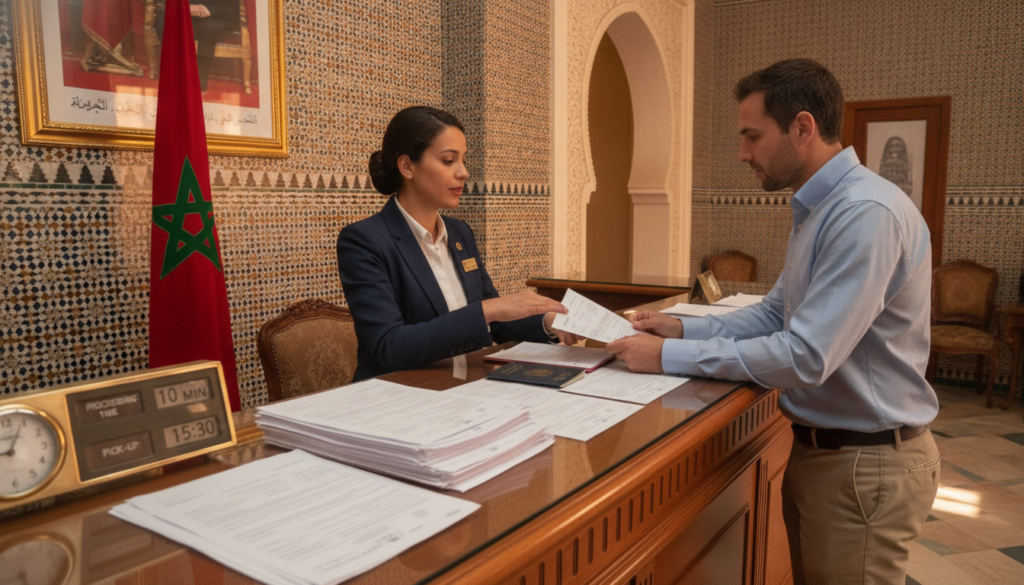
The usual visa processing time Morocco takes is 5 to 10 business days. This starts when the consulate gets your complete application. Always apply at least three weeks before you plan to travel.
Travel seasons can get busy, leading to longer wait times. Apply early to avoid last-minute stress.
Expedited Processing Options
Need to travel fast? Morocco might offer expedited services for emergencies. Check with your local consulate for these options.
Have proof of urgent travel ready, like a flight ticket. Expedited services cost more and aren’t guaranteed. Always check with the embassy first.
| Service Type | Typical Duration | Best For |
|---|---|---|
| Standard | 5–10 Business Days | Planned Vacations |
| Expedited | 2–4 Business Days | Documented Emergencies |
| Peak Season | 10–15 Business Days | Holiday Travel |
Costs Associated with a Moroccan Visa
Before you plan your travel budget, it’s key to know the costs of a Moroccan visa. Proper financial planning helps keep your trip stress-free from the start. Knowing the visa fees Morocco asks for lets you plan your money better for your adventure.
Visa Fees for US Citizens
The main cost is the government fee for your entry permit. These visa fees Morocco change based on your visa type and stay length. Always check the latest fees on the embassy’s official website before paying.
Most consulates want payments in specific ways, like money orders or certified checks. Always confirm the accepted payment methods with your local consulate to avoid delays. Keeping your receipts is a good idea for your travel records.
Additional Costs to Consider
There are extra costs beyond the application fee. You might need to pay for document translation or courier services. These hidden costs can add up, so budget a little extra.
If you want a detailed guide for your trip, check out your Morocco global adventures: a step-by-step guide. Investing in reliable services now saves you time and stress later. Knowing all visa fees Morocco might charge helps you enjoy your trip without worrying about money.
Entering Morocco: Customs and Immigration
Arriving at a Moroccan airport is easy if you’re prepared. Whether you’re exploring culture or heading into the desert, knowing what you need is key. Being organized helps you move through the terminal smoothly.

What to Expect at Immigration
When you arrive, head to the immigration area. You’ll need your passport, making sure it’s valid for your stay. Keep your boarding pass and any entry forms handy for officials.
Border officers are usually friendly and quick. They might ask about your visit or how long you’ll stay. Answering clearly helps you get into Morocco easily as you start your travel to Morocco.
“Preparation is the key to turning a complex international arrival into a simple, stress-free experience for every global explorer.”
Customs Regulations for Travelers
After immigration, you’ll get to your luggage at customs. Know the rules on bringing goods and money. You can bring personal items, but there are limits on certain items and money.
If you have a lot of cash, tell customs. Knowing these rules helps avoid delays and keeps your travel to Morocco fun. Always check the latest rules before you go to follow local laws.
Duration of Stay in Morocco
It’s important to know the rules about your visa duration Morocco for a smooth trip. Whether you’re going for a quick visit or a longer stay, knowing your legal status is key. Staying organized helps make your trip enjoyable from the beginning to the end.
Maximum Stay for Visa Holders
Most U.S. citizens can stay for 90 days. This starts when you go through immigration. It’s very important to check your entry stamp to know when you must leave.
Looking for ideas? You might want to check out a quick guide to spend 5 days in. No matter your plans, staying over 90 days can cause fines or travel problems. Always have your travel papers ready to show your arrival date if asked.
Options for Visa Extensions
If you want to stay longer, you can ask for an extension. You’ll need to go to a local police station or immigration office. You must have a good reason, like health issues or travel delays.
But, extensions are not guaranteed and depend on local authorities. Start the process early to increase your chances. Keeping your documents in order helps a lot.
Tips for a Smooth Visa Experience
Getting ready for your trip means paying close attention to details. It’s important to plan ahead. This way, you can avoid any last-minute problems.
Staying Informed About Changes
Travel rules can change quickly. It’s smart to check the Moroccan Ministry of Foreign Affairs’ website often. This ensures your travel documents are always up to date.
Contacting the Moroccan Embassy in the US
Talking directly to the Embassy of the Kingdom of Morocco in Washington, D.C., is best. They can help with any tricky paperwork. Their team will make sure you know the latest visa rules for Morocco.
By getting the right information early, you’ll make your trip planning easier. You’ll feel confident knowing your documents are in order for your Moroccan adventure.