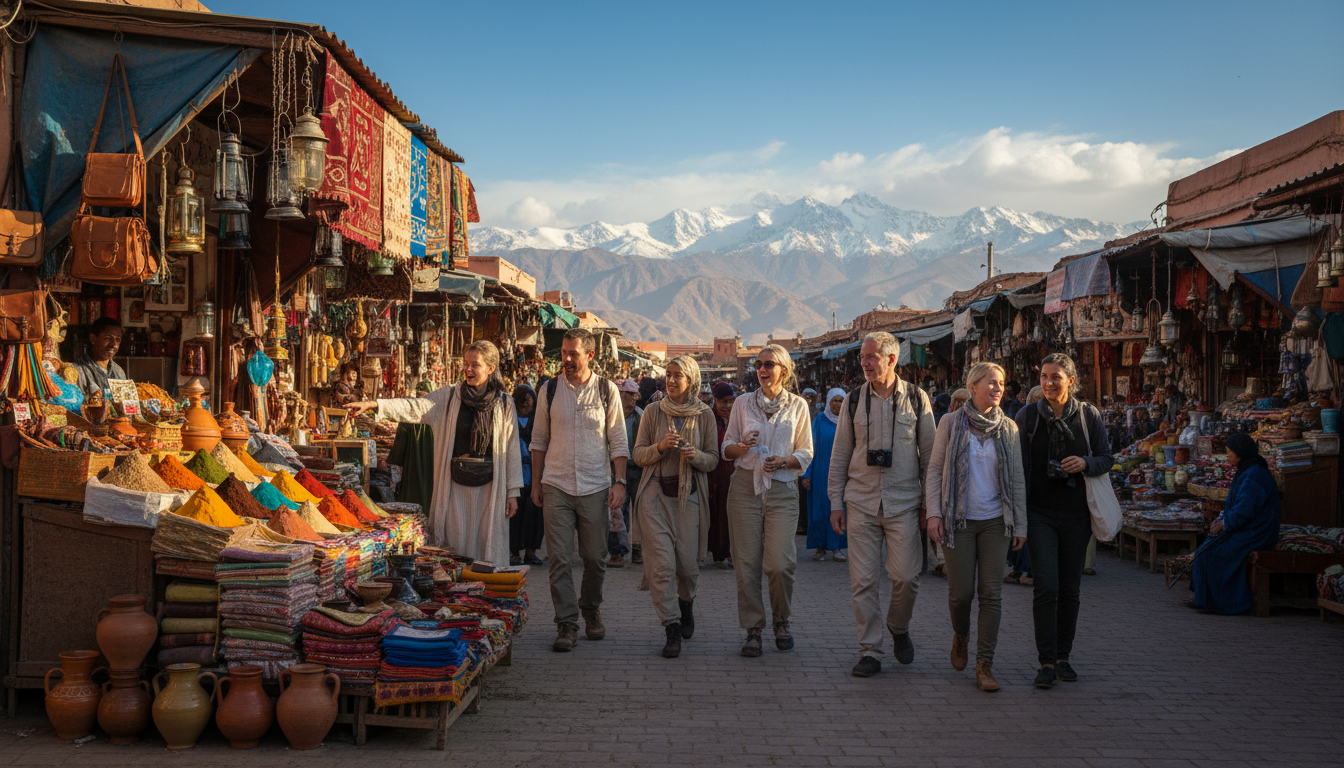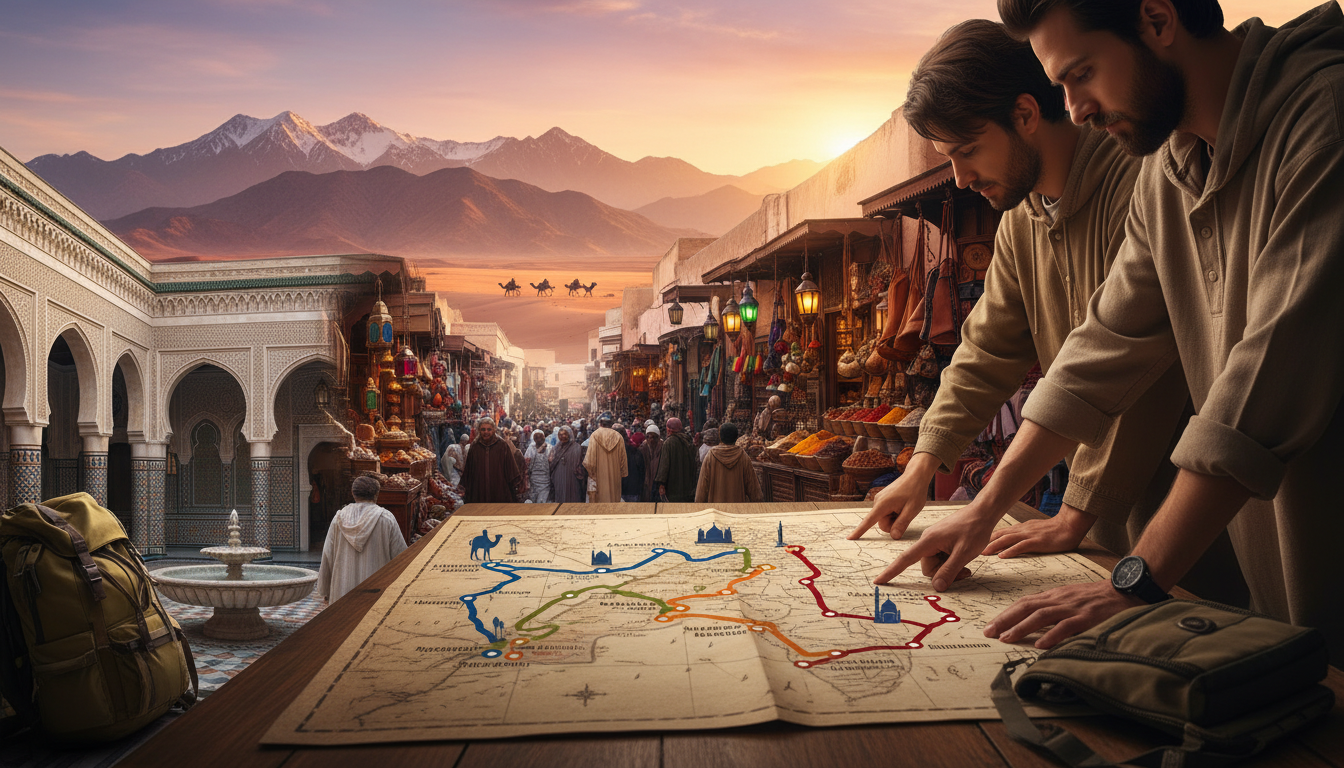
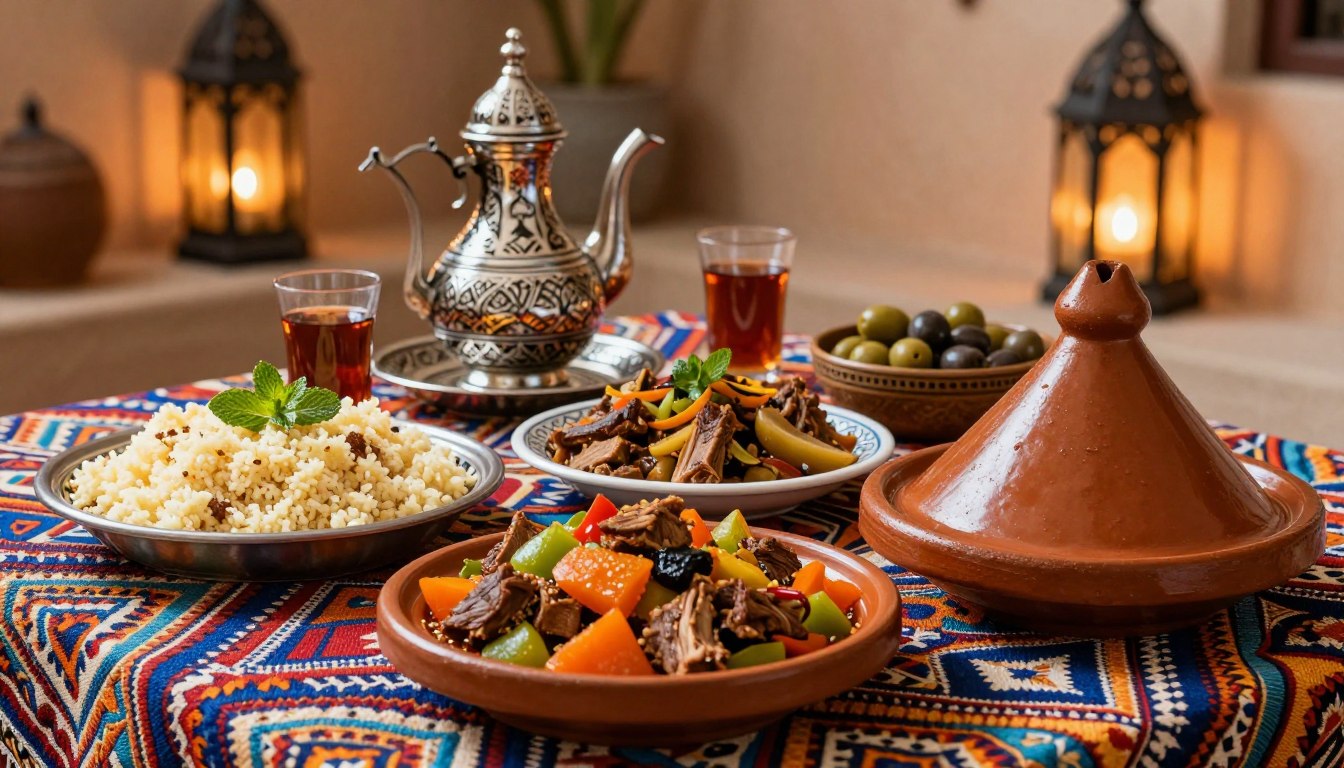
Imagine walking through Marrakech’s lively streets. You’re surrounded by the smells of exotic spices and the buzz of souks. A food tour in Morocco is a unique experience, full of rich flavors and aromas. On a guided food tour, you’ll try local dishes and learn about their cultural importance.
Every dish, from slow-cooked Tagines to sweet B’stilla pastries, has a story. With a culinary tour morocco guide, you’ll see the Medina, Gueliz, and Mellah. These places show the true heart of Moroccan food.
Key Takeaways
- Discover the rich flavors and aromas of Moroccan cuisine on a guided food tour.
- Explore the cultural significance of traditional dishes and cooking techniques.
- Visit local markets and meet producers to learn about Marrakech’s culinary traditions.
- Sample a variety of must-try dishes, from savory Tagines to sweet pastries.
- Choose the right food tour for your preferences, whether group or private.
Introduction to Moroccan Cuisine
Moroccan cuisine is a mix of flavors and techniques from centuries of cultural exchange. This rich culinary heritage shows Morocco’s role at the crossroads of Africa, the Mediterranean, and the Arab world.
The Rich Cultural Heritage of Morocco
Moroccan cuisine reflects the country’s diverse cultural influences. The blend of Arab, Mediterranean, and African traditions has created a unique taste. This mix is seen in the variety of dishes and cooking methods across Morocco.
The historical trade routes and Morocco’s location have shaped its cuisine. The arrival of different cultures has brought many ingredients and cooking methods. This makes Moroccan cuisine very diverse.
Key Ingredients in Moroccan Cooking
Preserved lemons, olives, and spices like cumin, coriander, and cinnamon give Moroccan dishes their unique taste. Fresh produce like tomatoes, peppers, and herbs are also key. They are often paired with meats like lamb, chicken, and beef.
- Preserved lemons add a salty, tangy flavor to dishes like tagine.
- Olives are commonly used in cooking and as a condiment.
- A blend of spices, known as ras el hanout, is a hallmark of Moroccan cuisine, adding depth and complexity to various dishes.
Knowing these key ingredients and their uses is key to understanding the complexity and richness of authentic Moroccan cuisine.
Popular Moroccan Dishes You Must Try
Morocco’s food is rich and diverse, telling stories of tradition and culture. When you visit, don’t miss out on these iconic dishes. They offer a taste of Morocco’s rich food history.
Tagine: The Heart of Moroccan Meals
Tagine is more than a dish; it’s a cooking method and a cultural symbol. It’s cooked in a clay pot with a conical lid. This slow-cooked stew can have meat, vegetables, and dried fruits. The slow cooking blends flavors, making a rich stew.
For a real experience, try Moroccan cooking classes to learn how to make Tagine.
Couscous: A Staple Across the Country
Couscous is key in Moroccan cuisine, served on special days and family gatherings. It’s made from semolina flour and steamed with vegetables and meat. This makes it light and fluffy, soaking up sauce flavors.
Couscous is versatile and loved in Moroccan homes. Best food tours in Morocco show how it’s enjoyed in different places.
Pastilla: A Unique Pastry Experience
Pastilla, or Bastilla, is a savory pie that shows off Moroccan cuisine’s complexity. It has layers of flaky pastry, filled with meat, onions, and spices. Pastilla balances sweet and savory, often served as an appetizer or at special times.
Making Pastilla is an art that needs patience and skill. It’s a highlight of food experiences Morocco offers.
In conclusion, Moroccan cuisine is full of delicious dishes with deep cultural roots. From Tagine to Couscous and Pastilla, each dish offers a unique taste. Whether on a food tour or in cooking classes, trying these dishes will make your culinary journey richer.
The Street Food Scene in Morocco
Exploring Morocco’s street food is an adventure. It combines culture, tradition, and delicious flavors. The country’s street food scene shows its rich cultural heritage. It has influences from Arab, Mediterranean, and African cuisines.
Local Markets: A Feast for the Senses
Local markets, or souks, in Morocco are a feast for the senses. They offer a wide array of street food stalls. You can find everything from freshly squeezed orange juice to spicy grilled meats.
The atmosphere is lively. Vendors call out their daily specials. The smells of various dishes fill the air.
Visiting local markets is a must for experiencing the authentic taste of Morocco. You can sample local specialties like kebabs, b’stilla, and freshly baked bread. It’s a chance to engage with local vendors and learn about Moroccan cuisine.
Must-Try Street Food Items
When exploring Morocco’s street food scene, there are several dishes you should not miss. Some of the must-try items include:
- Kebabs: Grilled meats, often served with a side of spices and bread.
- B’stilla: A savory pie made with layers of flaky pastry, meat, onions, and spices.
- Freshly baked bread: A staple in Moroccan cuisine, often served with olive oil, honey, or jam.
For a more complete culinary experience, consider joining a guided tour in Morocco. It can provide insights into the local food culture and help you discover hidden gems.
| Street Food Item | Description | Price Range |
|---|---|---|
| Kebabs | Grilled meats served with spices and bread | $2-$5 |
| B’stilla | Savory pie with layers of pastry, meat, and spices | $3-$6 |
| Freshly baked bread | Staple bread often served with olive oil or honey | $1-$3 |
Culinary Regions of Morocco
Morocco’s food scene is as varied as its landscapes. Each area has its own special tastes. This diversity comes from the country’s rich culture and geography.
The Diverse Flavors of Marrakech
Marrakech, called the Red City, is a food lover’s dream. It’s where Moroccan and international tastes blend. You can try everything from savory tagines to sweet pastries, all with a lively vibe.
The souks (markets) in Marrakech are full of flavors. They offer a journey through the city’s tastes. From the smell of fresh bread to the colors of spices, Marrakech shows off Moroccan hospitality.
Coastal Influences in Essaouira
Essaouira, a coastal town, adds a fresh twist to Moroccan food with its seafood. The town’s dishes often include grilled fish and seafood stews. Its relaxed vibe and beautiful harbor make it perfect for a calm food adventure.
Berber Traditions in the Atlas Mountains
The Atlas Mountains are home to the Berbers, who keep their cooking traditions alive. Their food is simple but hearty, using local meats and veggies. Berber meals often include tagines in clay pots and flatbreads.
Visiting the Atlas Mountains lets you taste real Berber food. It’s deeply rooted in the area’s culture. The Berbers’ warm welcome makes the experience unforgettable.
Cooking Classes: Immerse Yourself in Moroccan Culture
Start a culinary adventure in Morocco by joining a cooking class. Moroccan food is a mix of flavors, smells, and cooking styles. There’s no better way to learn it than by doing it yourself.
Learning Traditional Cooking Techniques
In a Moroccan cooking class, you’ll learn old cooking methods. You’ll learn how to make a perfect tagine and couscous. These skills make Moroccan dishes special.
Experienced local chefs will teach you. They’ll share their knowledge of ingredients, cooking, and the culture behind each dish. You’ll learn to:
- Make traditional dishes like chicken tagine and pastilla
- Use spices and herbs to create deep flavors
- Cook with traditional Moroccan pots, like clay ones
Selecting Fresh Ingredients at Local Markets
Visiting local markets is a big part of the class. It lets you pick the best ingredients. You’ll see Morocco’s colorful and varied produce.
At the markets, you’ll learn to pick the freshest ingredients. You’ll see how quality matters in Moroccan cooking. Here’s what you might find:
| Ingredient | Description | Used In |
|---|---|---|
| Fresh Mint | Aromatic herb with cooling properties | Mint Tea, Salads |
| Olive Oil | Rich, fruity oil from local olives | Tagines, Couscous |
| Preserved Lemons | Lemons pickled in salt and spices | Tagines, Salads |
By learning to cook and shopping at local markets, you’ll love Moroccan food more. You’ll also know how to make its flavors at home.
The Art of Moroccan Spices
In Moroccan cooking, spices are more than just ingredients. They turn simple dishes into amazing ones. The skill of mixing spices has been passed down for generations. It adds to Morocco’s rich food heritage.
Common Spices Used in Moroccan Dishes
Moroccan food is known for its spices. Ras el hanout, or “head of the shop,” is a mix of up to 30 spices. These include cumin, coriander, cinnamon, ginger, and turmeric. Paprika, cayenne pepper, and cardamom are also common.
These spices are mixed in different ways. This creates the complex flavors found in Moroccan dishes.
Here are some key spices and their uses:
- Cumin: Adds warmth and depth to tagines and stews.
- Coriander: Gives a sweet and citrusy flavor to various dishes.
- Cinnamon: Used in both sweet and savory dishes, adding a warm, spicy flavor.
- Ginger: Contributes a zesty, warming flavor to many recipes.
How to Use Moroccan Spices at Home
Trying Moroccan dishes at home can be fun. The right spices are essential. Start with Ras el hanout, a versatile blend for many dishes.
To get an authentic taste, mix spices with olive oil, garlic, and lemon juice. For example, marinate chicken in ras el hanout, olive oil, and lemon juice. Then, slow-cook it with onions and dried fruits.
For more Moroccan culinary adventures, consider a Moroccan tour. It includes cooking classes, letting you dive into local culture and food.
Dessert and Sweets: A Taste of Morocco
Moroccan sweets are known for their complex flavors and stunning looks. They are a feast for the senses. Moroccan desserts are famous for their deep flavors, often using honey, almonds, and orange blossom water. These ingredients not only taste great but also show the country’s rich culture and food history.
Traditional Moroccan Pastries
Moroccan pastries are a true delight. Baklava and ghriba are two favorites. Baklava is a mix of phyllo dough, nuts, and honey, making it crunchy and chewy. Ghriba, a cookie, is soft and often flavored with nuts or coconut.
- Baklava: A layered pastry made with phyllo dough, nuts, and honey.
- Ghriba: A shortbread-like cookie often flavored with nuts or coconut.
- M’hancha: A pastry made with layers of flaky dough, nuts, and honey, rolled into a coil.
The Role of Mint Tea in Moroccan Culture
Mint tea is more than a drink in Morocco; it’s a sign of welcome and warmth. The way it’s made and served is seen as an art. Tea is poured high to make a foamy top. This tradition is key in Moroccan culture, enjoyed at social events and meals.
For a taste of Moroccan desserts and mint tea, try a Moroccan cooking class or best food tours in Morocco. These experiences let you learn how to make traditional dishes. You’ll also understand the deep cultural meaning of food in Morocco.
Exploring Moroccan Food Pairings
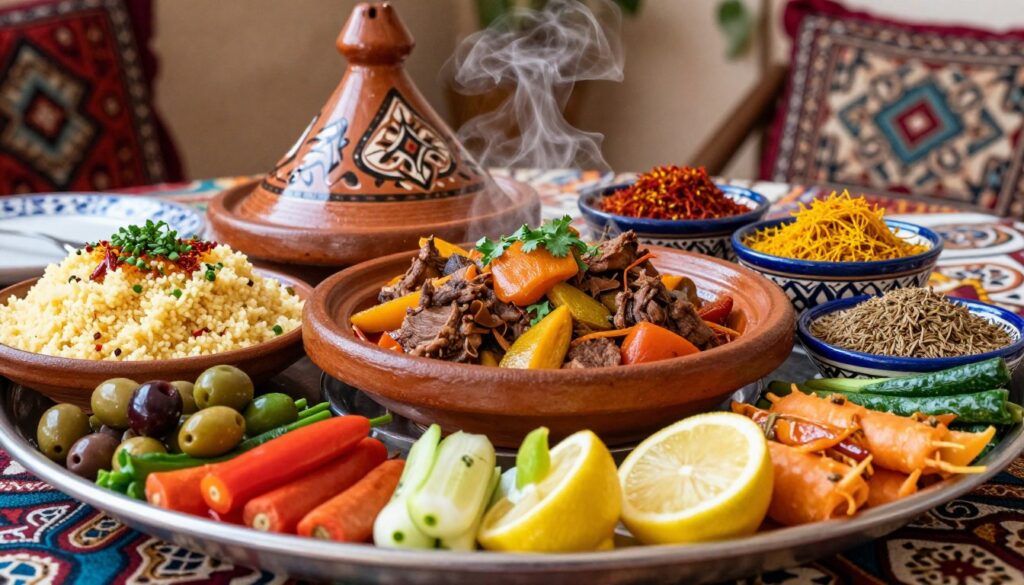
In Morocco, pairing food with drinks is a big part of dining. It shows the country’s rich culture. Moroccan food, with its many flavors and smells, is perfect for trying different pairings.
Wine and Food Pairing in Moroccan Cuisine
Even though most Moroccans don’t drink alcohol, wine pairing is possible in tourist spots. A dry rosé goes well with spicy tagine. A rich red wine pairs well with pastilla. On a guided food tour in Morocco, you can try these pairings.
Traditional Beverages Beyond Mint Tea
Morocco has more than mint tea to offer. Orange blossom water is a sweet and fragrant drink often found in desserts. Lemon juice is refreshing and goes well with Moroccan dishes. Trying these drinks is key to understanding Moroccan gastronomy.
For a deeper dive into Moroccan food and drinks, consider a culinary tour. It’s a chance to learn about cooking and taste local drinks. A culinary tour is a great way to explore Morocco’s rich food culture.
Food Tours: A Step-by-Step Guide
Explore Morocco’s flavors with a guided food tour. It’s a great way to dive into the local food culture. You’ll see more than just tourist spots.
Choosing the Right Food Tour for You
Think about what you want from a food tour. Do you want to try street food, learn about local ingredients, or cook like a pro? Different tours offer different experiences. Pick one that matches your food interests.
When picking a food tour, consider these:
- The tour’s focus (e.g., street food, home-cooked meals, or specific regional cuisine)
- The size of the tour group
- The duration of the tour
- Inclusions (e.g., meals, cooking classes, or market visits)
What to Expect on a Moroccan Food Tour
A Moroccan food tour is a full culinary adventure. You’ll visit markets, local homes, and famous restaurants. Expect to:
- Try traditional dishes like tagines and pastilla
- Discover the cultural importance of ingredients and cooking
- Meet local chefs and food sellers
The best food tours in Morocco mix food, culture, and community. They offer a memorable experience that’s more than just eating.
Health and Safety Tips for Food Travelers
Exploring Morocco’s food scene is exciting, but safety comes first. Morocco has good food safety rules. Yet, knowing what to eat and where can lower risks. By picking safe places and understanding local cleanliness, you can enjoy Moroccan food safely.
Navigating Food Safety Standards
Morocco’s food safety is strong, but caution is key. Go for places locals love and have a good name. Joining guided food tours Morocco is a smart move. It lets you try the best food safely.
Key Practices for Food Safety:
- Choose busy restaurants and stalls with high turnover.
- Avoid undercooked or raw foods that may pose a risk.
- Ensure that your food is handled and stored properly.
Staying Safe While Sampling Local Cuisine
Trying local food is a big part of Morocco travel. But, do it safely. Know the ingredients, if you have allergies. In Moroccan cooking classes, watch how ingredients are used to avoid sickness.
Tips for Enjoying Local Cuisine Safely:
- Be cautious with street food and choose vendors who follow proper hygiene practices.
- Stay hydrated and avoid consuming tap water.
- Enjoy the taste of Morocco by trying a variety of dishes, but do so at reputable establishments.
Cultural Etiquette Around Food in Morocco
Mealtimes in Morocco are very important. They show the country’s values of kindness and community. Knowing the local dining customs is key for a real experience on a culinary tour Morocco.
Understanding Moroccan Dining Customs
Dining in Morocco is all about being together. Meals are shared on big platters, making everyone feel connected. It’s important to eat with your right hand, as the left is seen as unclean. Visitors should do this to respect the culture.
Also, wait for the host to tell you where to sit and when to start. The host serving you personally is a big sign of welcome and respect. Knowing these customs makes your culinary tour Morocco better, letting you connect more with the locals.
| Dining Custom | Description | Significance |
|---|---|---|
| Eating with the Right Hand | Meals are eaten with the right hand, as the left is considered unclean. | Shows respect for local traditions. |
| Waiting for the Host | Guests wait for the host to indicate seating and starting to eat. | Demonstrates respect for the host and the culture. |
| Sharing Food | Meals are served on a large, shared platter. | Fosters a sense of community and togetherness. |
The Significance of Sharing Meals
Sharing meals is central to authentic Moroccan cuisine and Moroccan gastronomy. It shows hospitality, generosity, and community. Sharing a meal with Moroccans is more than just tasting food; it’s joining a tradition that strengthens relationships.
It’s polite to praise the host’s cooking during a meal. This is not just about the food. It’s about making connections and creating memories, which is what a culinary tour Morocco is all about.
Beyond Food: Experiencing Moroccan Hospitality
Morocco is more than its food; it’s about the warmth of its people and traditions. Moroccan hospitality is famous everywhere, and meals are key to this welcoming culture.
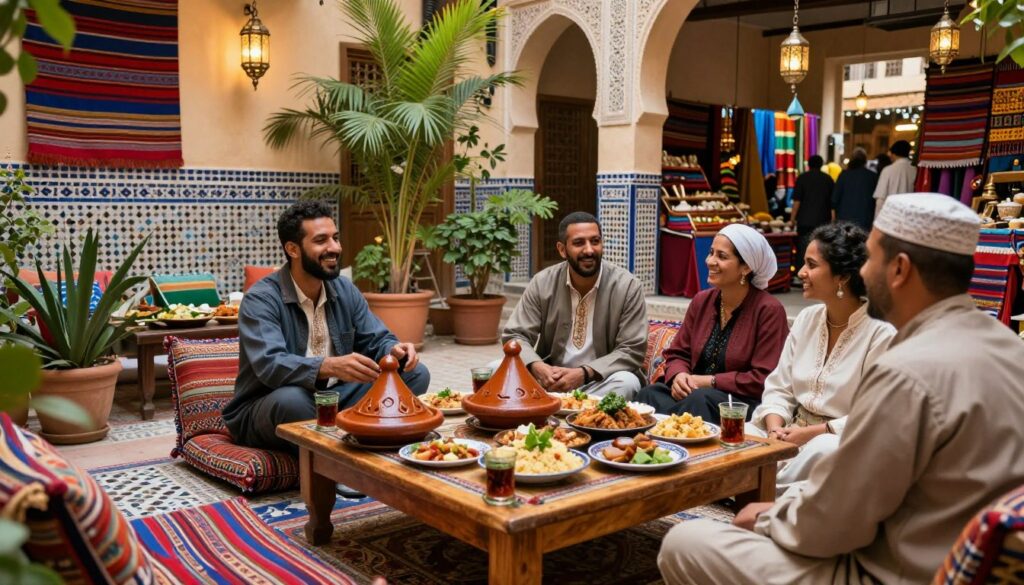
The Importance of Family and Community in Moroccan Meals
In Morocco, family and community are the heart of meals. Food brings people together, across ages and backgrounds. Traditional meals are big, with many dishes, all about sharing and kindness.
Communal dining is very important in Morocco. It’s when families, friends, and communities come together. They share food and warm conversations.
Making Connections Through Culinary Experiences
Guided food tours Morocco help visitors connect with locals. These tours introduce travelers to Moroccan gastronomy and the culture behind meals.
By joining food experiences Morocco, travelers meet local cooks. They learn about cooking traditions and food’s role in daily life. This deepens their appreciation for Moroccan hospitality.
Exploring Morocco’s food is more than just tasting. It’s about feeling the warmth and kindness of the Moroccan people. This mix of Moroccan gastronomy and hospitality leaves lasting memories, making every meal special.
Planning Your Moroccan Food Tour
Going on a Moroccan food tour is a fun adventure that needs some planning. Morocco has many different foods to try, and when you go can make a big difference.
Best Times to Visit for Culinary Experiences
The seasons change the food in Morocco. The best times to go are spring (March to May) and autumn (September to November). The weather is nice, and the food is fresh.
In spring, you’ll find lots of oranges and lemons. Autumn brings olives and grapes. These foods are key to Moroccan dishes.
Must-Visit Cities for Food Lovers
Morocco has cities that food lovers must see. Marrakech is a food paradise with its souks and street food. You can try everything from tagines to pastilla.
Fez is famous for its traditional food. The old medina has many food stalls and restaurants. Essaouira is great for seafood, with fresh fish and seafood dishes.
- Marrakech: Explore the souks and try traditional dishes like tagine and couscous.
- Fez: Experience the traditional Moroccan cuisine in the ancient medina.
- Essaouira: Enjoy the fresh seafood and local specialties like grilled fish.
Plan your Moroccan food tour for the best times and visit these cities. You’ll have a rich and tasty experience.
Conclusion: Embark on Your Moroccan Culinary Adventure
As you finish your Moroccan food journey, the smells and tastes will stay with you. Moroccan food shows the country’s rich culture, shaped by history, geography, and people’s warmth. To really get the taste of Morocco, try moroccan cooking classes. There, you can learn to make dishes like tagines and couscous.
Discovering the Depths of Moroccan Cuisine
Moroccan cooking classes let you dive into local ingredients and techniques. From bustling souks to peaceful countryside, each step deepens your understanding of Moroccan food. Whether it’s street food or a meal in a riad, Morocco’s food will make your journey richer.
Continuing Your Culinary Exploration
We urge you to keep exploring Morocco’s food scene. With its many regions, each with its own culture, there’s always something new. Whether on a guided tour or your own adventure, Morocco’s flavors are waiting for you.