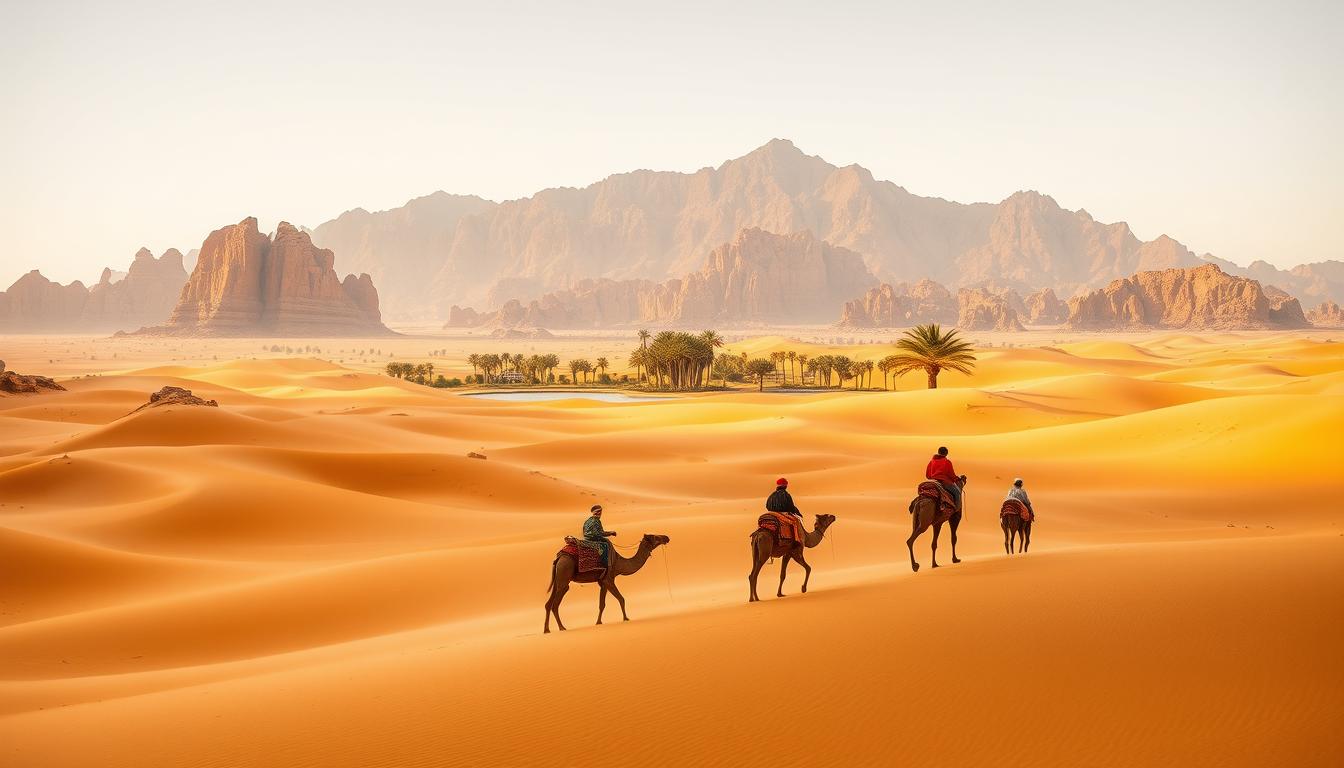
Imagine starting a journey of a lifetime, exploring the Sahara Desert on a camel ride. The vast dunes and peaceful landscapes are waiting for us. This adventure is more than just a ride; it’s a dive into Moroccan culture and desert beauty.
As we move through the sandy dunes, the desert’s calm wraps around us. A camel trek from Marrakech lets us connect with nature and learn about Morocco’s rich culture.
Key Takeaways
- Explore the Sahara Desert on a camel ride
- Experience the rich cultural heritage of Morocco
- Enjoy the serene landscapes and majestic dunes
- Connect with nature in the vast desert expanse
- Create unforgettable memories on your desert adventure
Why Choose a Camel Trek from Marrakech?
Going on a camel trek from Marrakech is an adventure unlike any other. It mixes excitement with calm. As we travel through the Sahara Desert, we see vast sand dunes and peaceful landscapes. This makes for an experience we won’t forget.
The Unique Experience of Camel Trekking
Camel trekking is more than just a way to get around. It’s a deep dive into nature. The slow pace of the camels lets us take in the desert’s beauty. We see the tall sand dunes and the stars at night.
Guided camel tours are led by experts. They know the area’s history, culture, and terrain. Their knowledge adds to our journey, teaching us about local plants, animals, and traditions.
Embracing Moroccan Culture and Tradition
A camel trek from Marrakech lets us dive into Moroccan culture. We visit local villages and meet the people. We learn about their customs and life.
Meeting the Berber communities is special. They have a rich history and culture. By joining in local activities and sharing meals, we understand their traditions and challenges better.
A Different Perspective of the Sahara Desert
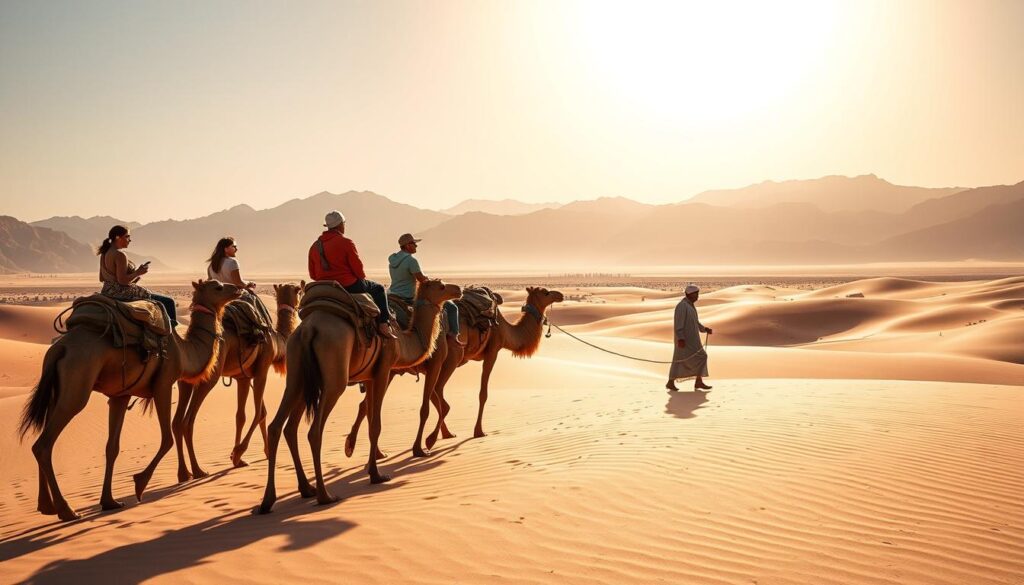
The Sahara Desert is unlike any other place. A camel trek gives us a special view of it. We see hidden oases, watch stunning sunsets, and feel the desert’s calm.
As we cross the Sahara, its beauty and changing landscapes amaze us. The best camel trekking experience is one that mixes adventure with peace. It lets us fully enjoy the desert’s beauty.
Best Time for a Camel Trek in Marrakech
Marrakech desert excursions are exciting ways to see the Sahara. Knowing when to go for a camel trek can really improve your trip. The Sahara is special in every season, from mild winters to hot summers. Knowing the weather can make your camel riding in Morocco even better.
Seasonal Considerations for Trekking
The best time for a Sahara desert camel tour depends on what you like for the weather. Winters (November to February) are cool and nice, perfect for trekking. Summers (June to August) are very hot, but trekking at night under the stars is unforgettable.
Spring (March to May) and autumn (September to November) have nice weather, making them great choices. These seasons offer a good mix of comfortable trekking and desert excitement.
Weather Patterns in Marrakech
Marrakech’s weather is usually warm and sunny. But, it can get cold in the winters, mainly at night. It’s important to know the weather to pack right for your trek. For more tips on planning your trip, check out our planning guide.
Events and Festivals Worth Experiencing
Marrakech is full of life, with many festivals and events all year. Going during one of these can make your camel trek even more special. For example, the Marrakech International Film Festival or the Marrakech Popular Arts Festival are great times to visit. They mix culture and adventure perfectly.
What to Expect on Your Camel Trek
Our camel trek from Marrakech is more than a journey. It’s a dive into Morocco’s rich heritage and stunning landscapes. As we explore the Sahara Desert, we’ll see vast dunes, peaceful desert nights, and the warmth of local culture.
Trek Duration and Distance
The trek’s length and distance depend on your chosen itinerary and preferences. Treks usually last from 2 to 7 days. This allows for a slow pace and plenty of time to enjoy the views.
- Short Treks: 2-3 days, perfect for those short on time, showing a glimpse of the desert’s beauty.
- Standard Treks: 4-5 days, a balanced mix of desert views, culture, and relaxation.
- Extended Treks: 6-7 days, for those who want to explore the Sahara’s vastness and remote areas.
Overview of Typical Itineraries
Our guided camel tours blend adventure, cultural immersion, and relaxation. A typical trip includes:
- Day 1: We leave Marrakech for the desert, with a scenic ride to our first campsite.
- Day 2-5: We trek through the desert, visit local Berber communities, and enjoy the peaceful landscapes.
- Day 6-7: We head back, with chances to revisit favorite spots or explore new ones.
Accommodations During the Journey
Our accommodations offer comfort and a taste of local culture. We stay in:
- Luxury Tents: With amenities for a comfortable stay.
- Riads: Traditional Moroccan houses that show local architecture and hospitality.
We aim to make your camel trek from Marrakech unforgettable. It’s a mix of adventure, culture, and relaxation in the Sahara Desert.
Preparing for Your Camel Trek
To enjoy our Moroccan camel trekking, we must prepare well. Getting ready is key for a great desert adventure in Morocco.
Essential Gear and Supplies to Pack
Right gear is vital for camel riding in Morocco. You’ll need sturdy shoes, comfy clothes, and sun protection like hats and sunglasses.
- Backpack: A comfy backpack for carrying essentials.
- Water Bottle: Stay hydrated with a refillable water bottle.
- First-Aid Kit: A basic kit with band-aids, wipes, and personal meds.
Clothing Recommendations for Various Conditions
The desert’s climate can be tough, with big temperature swings. Layered clothing helps adjust to these changes.
| Condition | Recommended Clothing |
|---|---|
| Daytime | Light, breathable clothes |
| Nighttime | Warm, layered clothes with a jacket |
| Windy Conditions | Windproof jacket or scarf |
Health and Safety Tips for Travelers
Staying safe on our desert adventure in Morocco is important. Drink lots of water, protect from the sun, and watch your surroundings.
- Hydration: Drink plenty of water all day.
- Sun Protection: Use sunscreen, a hat, and sunglasses for UV protection.
- Awareness: Be aware of your surroundings and follow our trek leaders.
Choosing the Right Camel Trekking Operator
Finding the right camel trekking operator is key for a great experience. With many companies to choose from, it can be tough. But, by focusing on a few important factors, you can find the perfect trip for you.
Researching Reputable Companies
Start by researching reputable companies. Look for those registered with local tourism boards. This shows they are professional and follow local standards.
Check their experience, knowledge of the terrain, and safety record. A good operator knows the desert well and can share interesting facts about the local culture and environment.
Reading Reviews and Testimonials
Reading reviews and testimonials is a great way to judge an operator. Look for feedback on their website and independent review sites. Focus on comments about the guides, camels, and the trek’s organization.
Good reviews mean a well-run operation. Bad feedback can point out issues. By considering others’ experiences, you can make a better choice.
Comparing Prices and Packages
After narrowing down your choices, compare prices and packages. Make a table to help you see the differences.
| Operator | Package Includes | Price per Person | Duration |
|---|---|---|---|
| Operator A | Guided Tour, Meals, Accommodation | $200 | 3 Days |
| Operator B | Guided Tour, Meals | $150 | 2 Days |
| Operator C | Guided Tour, Accommodation | $180 | 3 Days |
By comparing, you can find the best value. This ensures your camel trek meets your expectations.
Key Considerations: When picking an operator, think about their reputation, guide quality, and package details. This will lead you to a best camel trekking experience you’ll always remember.
The Role of Guides in Your Camel Trekking Experience
When you go on a Sahara Desert camel tour, your guide is key to making it a memorable trip. They do more than just show you the way through the desert.
Importance of Knowledgeable Guides
Guides are vital for a camel trek from Marrakech. They share a lot about the local culture, history, and nature. Their knowledge makes your trip educational and enriches your understanding of the area.
They know the best paths, the weather, and any dangers. This means you can enjoy the scenery without worrying about the trip details.
How Guides Enhance Your Trek
Guides do more than help with logistics; they open a window into local life. They can introduce you to nomadic tribes and explain the importance of landmarks. They also share stories about the area’s history.
They also keep you safe, knowing how to handle emergencies. This lets you fully enjoy the views and the desert’s calm.
Tips for Interacting with Your Guide
Talking to your guide can make your camel trek even better. Showing real interest in their stories and knowledge is a great way to start.
- Ask about the local culture and history.
- Thank them for their help and knowledge.
- Talk about your culture to share and learn from each other.
By doing this, you make your trip better and show respect for your guide.
Exploring the Landscape of the Sahara Desert
As we start our camel trek from Marrakech, the Sahara Desert stretches out like a golden sea. This journey lets us see the desert’s amazing landscapes, meet its wildlife, and take photos we’ll always remember.
Iconic Landscapes Along the Trek
The Sahara Desert is famous for its stunning views. We see towering sand dunes, peaceful oases, and huge sand areas. Trekking through, we see changing views that amaze and humble us.
The dunes of Erg Chebbi, near Merzouga, are a must-see. They offer dramatic views and unforgettable sunrises.
Wildlife Encounters During the Journey
Despite its tough conditions, the Sahara has a lot of wildlife. We might see fennec foxes, desert lizards, and many birds. Our guides know a lot about these animals, helping us learn and appreciate them.
Photo Opportunities You Won’t Want to Miss
The Sahara is full of great photo spots, from sunrise dunes to peaceful oases and starry skies. For the best photos, take pictures during the golden hours of early morning and late afternoon. For more tips on planning your trek and taking amazing photos, check out our 3-day itinerary from Marrakech to Merzouga.
The Culinary Delights of Moroccan Cuisine
Our Marrakech camel trek offers a culinary highlight, featuring traditional Moroccan dishes. These dishes are as flavorful as they are diverse. Moroccan cuisine blends Arab, Mediterranean, and African influences, showing the country’s rich cultural heritage.
What to Expect for Meals on the Trek
On our camel trek, we enjoy delicious meals made by our guides. They use fresh, local ingredients whenever they can. Breakfasts are hearty, with Moroccan pastries, bread, and jams, served with tea or coffee.
Lunches are lighter, with sandwiches, fruits, and nuts. Dinners are more elaborate, featuring Moroccan specialties. Meals are often enjoyed under the stars, adding to the desert’s ambiance.
Our guides are flexible and can meet various dietary needs. This ensures everyone has a great dining experience.
Traditional Dishes to Try
Moroccan cuisine offers a variety of dishes that are both flavorful and unique. Some traditional dishes we might enjoy include:
- Tagine: A slow-cooked stew named after the earthenware pot in which it’s cooked, typically made with meat, vegetables, and dried fruits.
- Couscous: A traditional North African dish made from semolina flour, often served with vegetables and meat.
- Harira: A comforting soup made with tomatoes, lentils, chickpeas, and spices.
| Dish | Main Ingredients | Typical Serving Time |
|---|---|---|
| Tagine | Meat, Vegetables, Dried Fruits | Dinner |
| Couscous | Semolina Flour, Vegetables, Meat | Lunch or Dinner |
| Harira | Tomatoes, Lentils, Chickpeas, Spices | Lunch or Dinner |
Dietary Accommodations and Options
We know our travelers may have different dietary needs and preferences. Our guides are skilled in accommodating various diets, from vegetarian and vegan to gluten-free and special needs. It’s important to tell us about any dietary restrictions before the trek.
By embracing local cuisine and considering dietary needs, we make our camel trekking experience unforgettable.
Cultural Etiquette During Your Trek
Exploring the Sahara Desert on a camel requires us to respect local customs. As we ride through the desert on a guided camel tour, we meet local communities. We learn about their traditions.
Basic Arabic Phrases to Know
Knowing basic Arabic phrases shows respect for the culture. Saying “As-salamu alaykum” (peace be upon you) and “Shukraan” (thank you) can make a big difference. It changes how locals see us.
| Phrase | Meaning | Context |
|---|---|---|
| As-salamu alaykum | Peace be upon you | Greeting |
| Shukraan | Thank you | Expressing gratitude |
| Marhaba | Hello | Informal greeting |
Dress Code and Respect for Local Customs
It’s important to dress modestly when meeting locals. We should cover our shoulders and knees as a sign of respect. Following local dress codes shows our respect and helps us connect with the community.
Interacting with Local Communities
Talking to local communities is rewarding. Being open, respectful, and interested in their lives leads to meaningful conversations. We should be mindful of our body language and tone, making sure our interactions are positive and respectful.
By embracing local culture and customs on our camel trek from Marrakech, we enhance our own journey. We also help create a more harmonious and respectful exchange between cultures.
Post-Trek Activities in Marrakech
After the Sahara Desert, we explore Marrakech’s wonders. This city mixes old and new, full of experiences. Marrakech is a feast for the senses, with sights, sounds, and smells that are truly Moroccan.
Exploring Historical Sites in the City
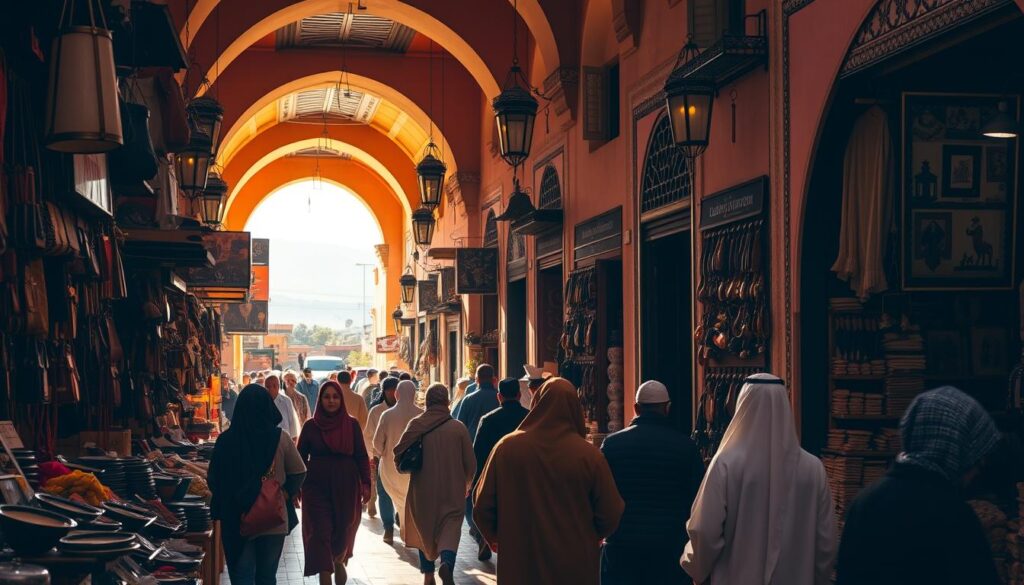
Marrakech has many historical sites showing its rich culture. The Medina, a UNESCO World Heritage Site, is a maze of alleys and souks. We can see the Koutoubia Mosque, the biggest mosque in Marrakech, with its stunning architecture and beautiful gardens.
- Explore the Medina and its souks
- Visit the Koutoubia Mosque
- Discover the Bahia Palace
Shopping for Souvenirs at Local Markets
Shopping at Marrakech’s markets is a must. The souks have everything from traditional crafts to modern souvenirs. We can bargain for handmade carpets, intricately designed jewelry, and local spices.
Relaxing at Traditional Hammams
After trekking, a visit to a traditional hammam is perfect. Hammams offer steam baths, scrubs, and massages. These spa treatments help us relax and refresh.
- Enjoy a steam bath
- Experience a traditional Moroccan scrub
- Treat yourself to a massage
Environmental Considerations of Camel Trekking
The Sahara Desert is a treasure that needs our care. As we explore its beauty, we must think about how our actions affect it. This is key for a responsible camel trekking adventure.
Importance of Sustainable Practices
Using sustainable practices is essential for our desert travels. This means choosing eco-friendly products and reducing waste. It helps keep the Sahara beautiful for others to see in the future.
- Opt for reusable water bottles and bags.
- Avoid littering and ensure proper disposal of waste.
- Use eco-friendly sunscreens and personal care products.
How to Leave No Trace While Trekking
Leaving no trace is a rule we should follow. It helps us not harm the desert. We must think about how our actions affect the environment.
- Stay on designated trails to avoid damaging the desert flora.
- Do not remove any plants, rocks, or other natural elements from their place.
- Be respectful of wildlife and their habitats.
By following these tips, we can have a great camel trekking experience. We also help keep the Sahara’s beauty intact.
Supporting Local Communities Through Tourism
Our camel trek is about more than just the views. It’s also about the people we meet. Supporting local communities is key for their economy and culture.
- Engage with local guides and businesses.
- Purchase local handicrafts and products.
- Show respect for local customs and traditions.
Helping local communities makes our Moroccan camel trekking better. It also helps the people who live in the Sahara.
In conclusion, our actions matter a lot for the Sahara Desert. By being sustainable, leaving no trace, and supporting locals, we make our Sahara desert camel tour both fun and responsible.
Personalized Camel Trekking Options
Our camel trek from Marrakech is made to fit your needs, making your desert adventure in Morocco unforgettable. You can choose from a quiet, private trip or a fun group outing. We have options for everyone.
Private vs. Group Treks
Camel trekking comes in two styles: private and group. A private trek lets you see the Sahara Desert on your own terms. A group trek, on the other hand, is a chance to meet new people and share the journey.
Private Trek Benefits: You get a customized plan, can go at your pace, and enjoy a quiet ride.
Group Trek Benefits: It’s a great way to make friends, share the adventure, and enjoy the lively vibe.
| Features | Private Trek | Group Trek |
|---|---|---|
| Itinerary Flexibility | High | Moderate |
| Social Interaction | Low | High |
| Cost | Higher | Lower |
Themed Treks and Special Interests
We have themed treks for those with special interests. Whether you love photography, nature, or culture, we have a trek for you. Our themed treks make your camel trek from Marrakech even more special.
- Photography treks with expert guides
- Nature-focused treks to spot unique wildlife
- Cultural treks that dive into local traditions
Customizing Your Itinerary
We know everyone is different, with their own likes and dislikes. That’s why you can customize your trek. Want to explore a special oasis or try something unique? We’ll help you make it happen.
Choosing our guided camel tour means you’re in for an adventure that will stay with you forever. Let us help you craft a desert adventure in Morocco that you’ll always remember.
Enhancing Your Camel Trekking Experience
Our camel trekking experience is more than just the ride. It’s about the people, culture, and activities we find along the way. As we explore the Sahara Desert, we can try various activities that make our adventure richer.
Optional Activities to Consider
There’s more to our trek than just riding camels. We can visit nomadic families, join in Berber ceremonies, and see ancient ruins. These activities add depth to our journey.
Watching the sunset over the dunes is unforgettable. Then, stargazing in the clear desert sky is a special experience. Such moments connect us deeply with nature.
| Activity | Description | Duration |
|---|---|---|
| Visit to Nomadic Family | Experience the hospitality and traditions of local nomadic families. | 2 hours |
| Berber Ceremony Participation | Join in traditional Berber ceremonies and learn about their cultural significance. | 1.5 hours |
| Exploration of Ancient Ruins | Discover historical sites along the trekking route. | 3 hours |
Engaging with Local Artisans
Meeting local artisans lets us dive into Moroccan culture. We can visit workshops where artisans make beautiful items using old techniques.
Some of the crafts we can observe include:
- Carpet weaving
- Pottery making
- Silver jewelry crafting
Talking to these artisans not only teaches us about their crafts. It also helps local communities by supporting them through tourism.
Learning About Traditional Crafts
Learning about traditional crafts is a big part of our trek. We get to learn from skilled artisans who share their knowledge with us.
Some of the traditional crafts we can learn about include:
- Traditional Berber weaving techniques
- Moroccan pottery and ceramics
- Handmade silver jewelry making
These experiences deepen our understanding of Moroccan culture. They also give us unique souvenirs that show the region’s craftsmanship.
Sharing Our Camel Trekking Experience
Our Sahara Desert camel trek was more than a journey. It was a life-changing experience. We saw stunning landscapes and learned about Morocco’s rich culture.
How Our Journey Has Changed Us
The camel trek from Marrakech taught us important lessons. We learned about resilience, adaptability, and appreciating beauty. Riding through the Sahara’s vast dunes brought us peace and calm.
Our trip wasn’t just about seeing places. It was also about meeting people. Talking to local communities and learning about their traditions made our journey even more meaningful.
Tips for Documenting Your Own Journey
Recording your Sahara Desert camel tour helps you reflect and share your experiences. Here are some tips:
- Keep a journal to record your thoughts, feelings, and observations.
- Take plenty of photos, but also be mindful of the moments you let slip by without capturing.
- Engage with your guides and local communities; their stories can enrich your understanding of the places you visit.
For more information on planning your trek, you can visit Africa Tours Marrakech to discover the best options for your best camel trekking experience.
The Joy of Sharing Stories with Others
Sharing our stories and experiences has been rewarding. It lets us relive our memories and inspires others to go on adventures.
Whether through social media, blog posts, or talking to friends and family, sharing keeps our journey alive. It encourages others to explore the wonders of a camel trek from Marrakech.
Conclusion: Embrace the Adventure
A camel trek from Marrakech is unforgettable. It mixes natural beauty, cultural learning, and personal growth. When planning your desert adventure Morocco, take the leap. Explore the Sahara Desert on a guided camel tour.
The Allure of a Marrakech Camel Ride
A Marrakech camel ride lets you see Morocco’s stunning landscapes. The Atlas Mountains provide a beautiful backdrop. You’ll ride through dunes, feeling the desert’s calm.
Our camel trekking offers memorable experiences. Whether you want a classic desert tour or an adventure, we have it.
Planning Your Trek
Think about when to go – spring and autumn are best. We offer tours that mix culture and adventure. You can make your trip fit your interests. We can’t wait to guide you on an amazing journey.