Imagine yourself in the lively culture of Marrakech. Explore the stunning landscapes of the Atlas Mountains. Then, relax on the beautiful beaches of Essaouira. Planning a trip to Morocco can seem hard, but we’re here to help.
Our trip planner will guide you to the best spots. You’ll learn what to do and get insider tips. Whether you’re a seasoned traveler or new to planning, we’ll help you create an unforgettable Morocco trip.
Key Takeaways
- Discover the best places to visit in Morocco
- Get insider tips on navigating local culture
- Learn how to plan a stress-free trip
- Explore the diverse landscapes Morocco has to offer
- Make the most of your Morocco adventure with our expert guidance
Overview of Our Morocco Travel Itinerary
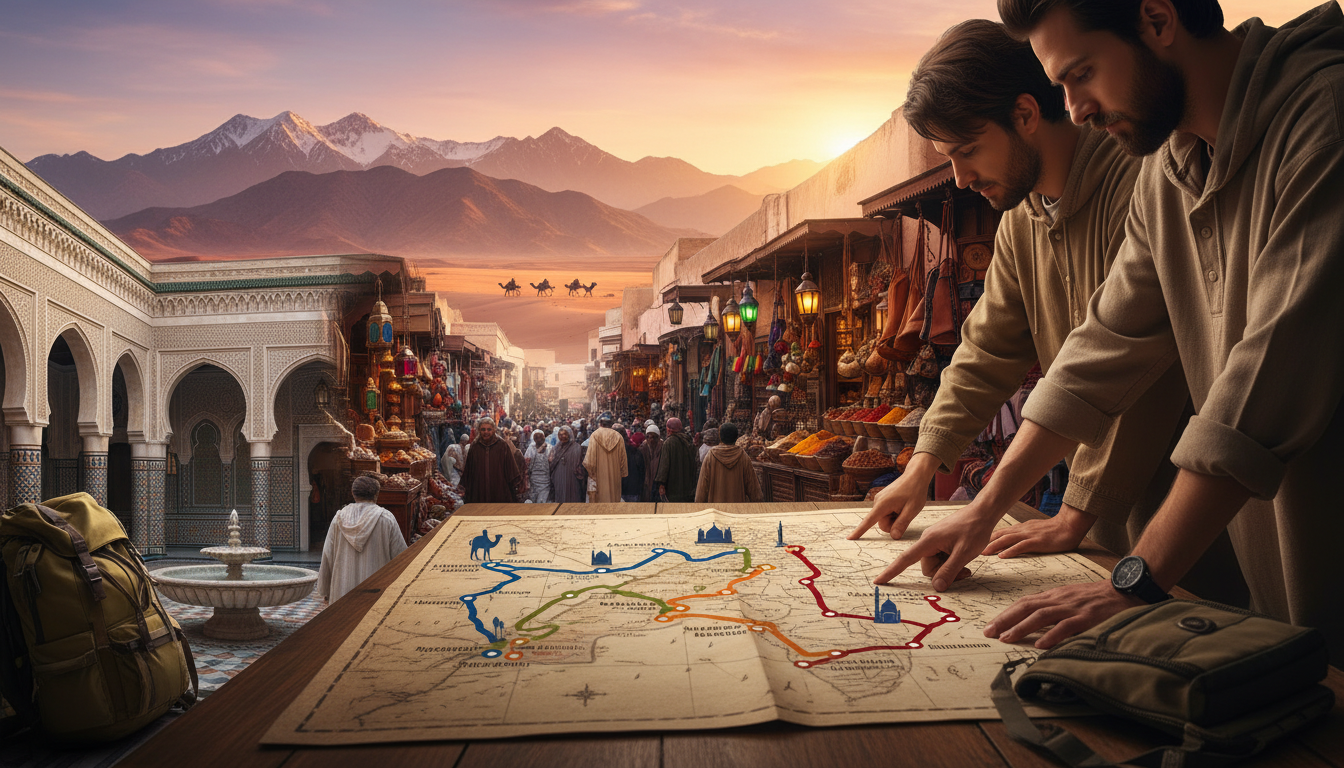
Explore Morocco’s wonders with our detailed travel plan. It’s packed with the country’s best sights, sounds, and history. This Morocco travel guide will make your trip unforgettable.
Key Highlights of the Journey
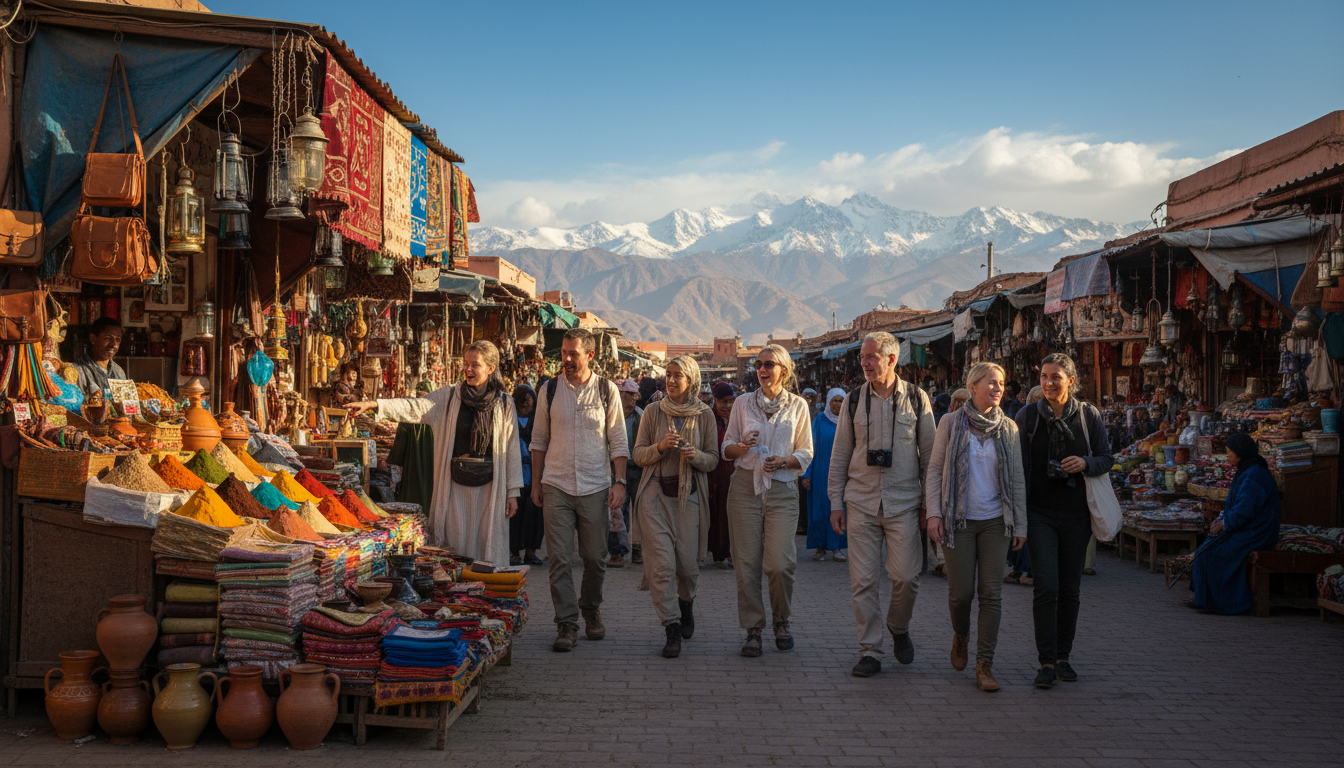
Our best Morocco itinerary takes you to Marrakech’s lively streets. Here, you’ll see, smell, and hear the vibrant souks. Then, hike the Atlas Mountains and visit Berber villages for stunning views.
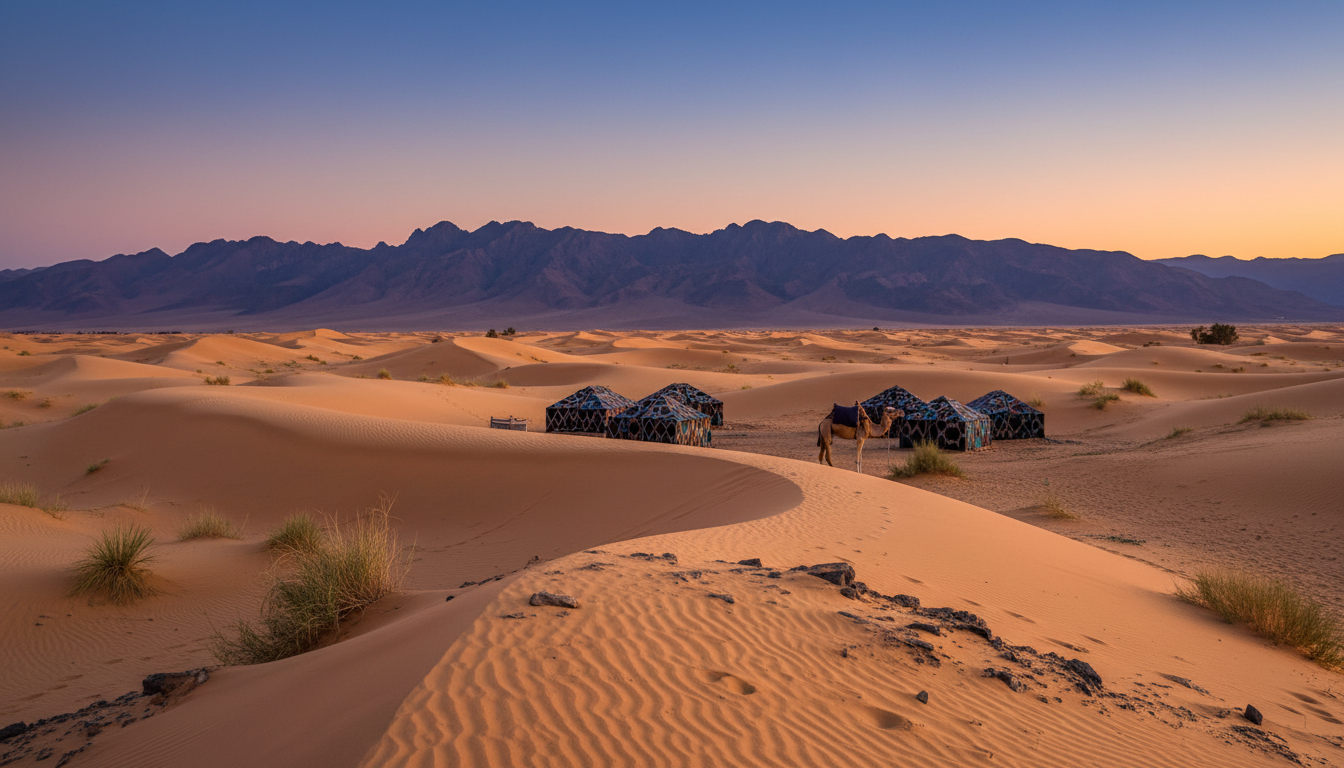
Next, relax on Essaouira’s beaches. This coastal town mixes Moroccan culture with a chill vibe. You’ll also go camel trekking in the Sahara Desert and watch the sunset over the dunes. Plus, explore Fes’s ancient history and culture.
Duration and Best Time to Visit
Our Morocco trip lasts about 14 days. This lets you dive deep into the country’s rich experiences without rushing. The best time to visit Morocco is spring (March to May) or autumn (September to November).
These seasons offer mild weather, perfect for seeing the cities, mountains, and deserts. Summer can be hot, and winter cool, so plan wisely.
Preparing for Our Trip to Morocco
Getting ready for Morocco means having all the right travel documents and plans. A well-thought-out trip makes our journey smooth and fun.
Essential Travel Documents
First, we need to check our passport’s validity for at least six months after our trip. We might also need a visa, depending on our nationality. It’s important to confirm with the Moroccan embassy or consulate in our home country about visa needs.
Here’s what we’ll need:
- A valid passport
- Completed visa application form (if required)
- Recent passport-sized photos
- Proof of travel plans (flight itinerary)
- Proof of enough money for our stay
Packing Tips for Morocco
Packing smart is key for a comfortable Morocco trip. The weather can be cool in the mountains and hot in the desert. So, we should bring layers. Also, don’t forget comfortable shoes for walking in medinas and markets.
Here’s what to pack:
- Light, breathable clothes
- Warm layers for chilly evenings
- Comfortable walking shoes
- Sun protection (sunscreen, hat, sunglasses)
- Reusable water bottle
Currency and Budgeting
The local currency in Morocco is the Moroccan dirham (MAD). Even though some places take credit cards, it’s wise to have local currency for small buys and traditional markets.
| Average Cost | Description |
|---|---|
| $10-$15 | Meal at a local restaurant |
| $20-$30 | Accommodation in a budget riad per night |
| $5-$10 | Local transport (bus or taxi ride) |
Planning our budget helps us manage our money well. We should think about costs for places to stay, food, transport, and activities. This way, we can stick to our budget.
Starting Our Adventure in Marrakech
Our journey in Morocco begins in Marrakech, a city that mixes old traditions with new ways. As we explore, we feel the city’s lively vibe and its deep cultural roots.
Exploring the Medina
The Medina of Marrakech is a maze of narrow paths and alleys. It’s filled with secret spots and busy markets. Walking through its old walls, we see local artisans making beautiful crafts and traditional Moroccan goods.
- Explore the souks (markets) for unique souvenirs and local handicrafts.
- Visit the iconic Jardin Majorelle, a stunning botanical garden by French artist Jacques Majorelle.
Must-See Attractions
Marrakech has many Morocco tourist attractions you can’t miss. Some highlights include:
- The Koutoubia Mosque, the biggest mosque in Marrakech, known for its amazing architecture.
- The Bahia Palace, a work of art in Islamic craftsmanship.
- The Jemaa el-Fnaa, a lively square with street performers, food stalls, and markets.
Local Cuisine to Try
Trying the local food in Marrakech is a must. Some dishes you should try are:
- Tagine, a slow-cooked stew cooked in an earthenware pot.
- Couscous, a traditional North African dish from semolina flour.
- Harira, a rich soup with tomatoes, lentils, and chickpeas.
Enjoying Marrakech’s flavors lets us follow the Morocco travel guide tips. Our food adventure is as unforgettable as the city’s historic sites.
Discovering the Atlas Mountains
The Atlas Mountains offer a peaceful escape from Morocco’s bustling cities. Here, we find lush valleys, charming villages, and stunning views.
Best Hiking Trails
The Atlas Mountains are perfect for hikers of all levels. We can tackle the summit of Mount Toubkal, North Africa’s highest peak, or enjoy a gentle walk in the valleys. Each step reveals new sights and sounds of nature.
Traditional Berber Villages
Visiting Berber villages in the Atlas Mountains is a highlight. We get to experience the Berber people’s kindness, learn about their traditions, and see their unique lifestyle. It’s a chance to dive deep into Morocco’s cultural heritage.
Scenic Viewpoints
The Atlas Mountains have many viewpoints with breathtaking views. From these spots, we see the hills, valleys, and peaks. It’s a time to pause, reflect, and capture the beauty of Morocco.
Exploring the Atlas Mountains is more than seeing nature’s beauty. It’s also about experiencing Morocco’s rich culture. This journey makes our Morocco travel itinerary unforgettable. Whether hiking, visiting villages, or enjoying the views, the Atlas Mountains touch our hearts. They show why this is one of the best Morocco itineraries.
Unwinding in the Desert City of Merzouga
The vast dunes of Merzouga are perfect for unwinding and rejuvenating. As we explore the Sahara Desert, the city’s tranquility wraps around us. It offers a unique Morocco travel experience.
Camel Trekking Experience
Camel trekking in Merzouga is a memorable attraction. We ride camels across the majestic dunes, feeling their gentle rhythm. This adventure lets us dive into the serene beauty of the Sahara.
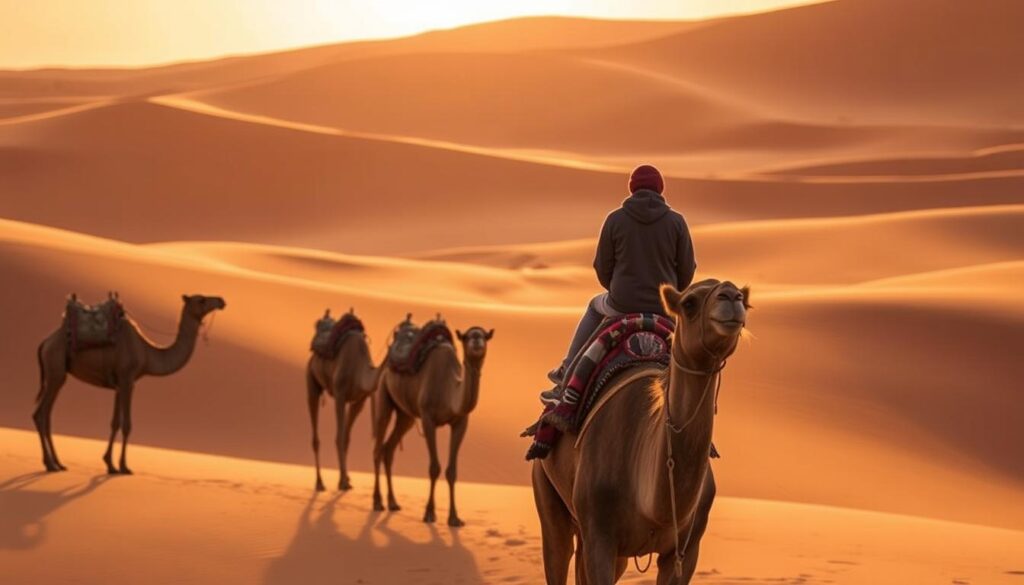
Sahara Desert Camps
After trekking, we stay in traditional Sahara Desert camps. Here, we experience the warm hospitality of the Berber culture. The camps offer various accommodations, from luxury tents to rustic settings, ensuring a comfortable stay under the stars.
Stargazing in the Desert
Stargazing in Merzouga is breathtaking. The clear desert skies show a dazzling display of stars, planets, and constellations. As we lie on our blankets, gazing upwards, the vastness of the universe unfolds before our eyes. It creates unforgettable memories of our Morocco trip.
| Activity | Duration | Highlights |
|---|---|---|
| Camel Trekking | 2 hours | Explore majestic dunes, experience Berber culture |
| Stargazing | Evening | Witness breathtaking night sky, enjoy campfire |
| Desert Camp Stay | Overnight | Traditional Berber hospitality, luxury or rustic tents |
Exploring Fes: The Cultural Capital
As we travel through Morocco, we reach Fes, a city full of the country’s rich culture. Fes is a place of history, culture, and tradition. It’s a key stop on our Morocco travel guide journey.
Fes is famous for its ancient buildings, lively markets, and important landmarks. We’ll explore this city, visit a UNESCO World Heritage Site, try local food, and see traditional crafts.
Fes el-Bali: A UNESCO World Heritage Site
Fes el-Bali, the old medina, is a maze of streets, markets, and architecture. It’s a UNESCO World Heritage Site. We’ll walk through its ancient walls and enjoy the sights and sounds.
Tasting Moroccan Street Food
Moroccan food is a mix of flavors and spices, and Fes is great for trying street food. We’ll enjoy savory tagines and sweet pastries. Some dishes to try include:
- Tagine: a slow-cooked stew with meat, vegetables, and dried fruits.
- Harira: a soup with tomatoes, lentils, and chickpeas.
- B’stilla: a pie with flaky pastry, meat, and spices.
Exploring Fes’s street food, we’ll also learn about Morocco travel essentials for local markets and eateries.
Craftsmanship and Artisan Workshops
Fes is famous for its traditional crafts like woodworking, pottery, and textiles. We’ll visit workshops to see the skill and craftsmanship. Crafts we might see include:
| Craft | Description |
|---|---|
| Woodworking | Intricately carved wooden furniture and decorative items. |
| Pottery | Handmade ceramics, including plates, bowls, and decorative pieces. |
| Textiles | Vibrant fabrics, including rugs, clothing, and embroidered items. |
By supporting local artisans, we help preserve traditional crafts and support the local economy. Our visit is a meaningful part of our Morocco travel guide experience.
Visiting the Coastal City of Essaouira
We’ve reached the charming coastal city of Essaouira, a place of relaxation and culture. It’s a great spot to unwind and see Morocco’s coast. Here, history, art, and nature come together beautifully.
Historic Medina and Fortifications
Essaouira’s Medina is a UNESCO World Heritage Site. It has 18th-century fortifications and a lively cultural scene. We can see the Skalla de la Ville, a fort with amazing views of the Atlantic and the city.
The Medina’s ramparts and bastions show Essaouira’s past importance. For a deeper look, there are guided tours. You can learn more about visiting Essaouira at Africa Tours Marrakech.
Beaches and Water Sports
Essaouira is famous for its beaches. Here, you can try windsurfing, kitesurfing, and fishing. The beaches have cafes and restaurants, perfect for seafood and relaxation.
The winds and shallow waters are great for surfers. Beginners and pros can enjoy the sea here.
Local Art and Music Scene
The city is a center for local artists and musicians. There are many galleries and music venues. We can see traditional Gnawa music and modern art as we explore.
The Gnaoua World Music Festival is a big event here. It draws visitors from everywhere.
Essaouira is a mix of culture, nature, and calm. It’s a must-see on any Morocco trip. Whether you love history, outdoor fun, or culture, Essaouira has it all.
A Trip to Chefchaouen: The Blue City
As we wander through Chefchaouen, the blue city charms us. It’s a must-see for anyone wanting to see Morocco’s true beauty. Chefchaouen, or the Blue City, is in the Rif Mountains of Morocco.
Exploring the Colorful Streets
The streets of Chefchaouen are perfect for photographers. Buildings in various blues create a dreamy feel. We find local artisans, cozy cafes, and lively markets as we wander.
Hiking in the Rif Mountains
Chefchaouen is great for hikers. The Rif Mountains have trails for all levels. The Peak of Tissouka hike offers stunning views.
| Hike Name | Difficulty Level | Approximate Duration |
|---|---|---|
| Tissouka Peak | Moderate | 4-5 hours |
| Rif Mountains Trail | Challenging | 6-7 hours |
| Chefchaouen Cascades | Easy | 2-3 hours |
Unique Shopping Experiences
Chefchaouen is famous for its crafts like wool, pottery, and traditional clothes. Shopping here is more than buying; it’s about meeting locals and learning about their lives.
Adding Chefchaouen to our Morocco trip makes it unforgettable. We can explore blue streets, hike, or shop for local crafts. Chefchaouen has something for every traveler.
Historical Sites of Casablanca
Casablanca is a city full of contrasts. It has some of Morocco’s most important historical sites. These landmarks tell the story of the city’s vibrant past.
The Majestic Hassan II Mosque
The Hassan II Mosque is a key landmark in Casablanca. It’s a stunning example of Islamic architecture. Its detailed stone carvings and tall minaret show Morocco’s rich culture. Visitors can take tours to see its grandeur and learn its history.
The Royal Palace
The Royal Palace is the King of Morocco’s home. Though it’s not open to the public, its architecture and gardens are worth seeing. It’s a notable landmark.
Cultural Venues and Museums
Casablanca has many cultural venues and museums. The Moroccan Jewish Museum gives a unique look at Morocco’s Jewish community. For a detailed guide, discover the best of Casablanca in 12 days offers a great itinerary.
| Historical Site | Description | Visitor Information |
|---|---|---|
| Hassan II Mosque | Iconic mosque with Islamic architecture | Guided tours available |
| Royal Palace | Official residence of the King of Morocco | Not open to the public, but visible from outside |
| Moroccan Jewish Museum | Showcases history of Jewish community in Morocco | Open to visitors, guided tours |
Experience Marrakech’s Nightlife
When the sun sets, Marrakech lights up with a lively nightlife. We’ll see that its evenings are as exciting as its days. They mix old-world charm with new fun.
Popular Restaurants and Cafes
Marrakech is famous for its food, and its eateries are the best places to try it. You can taste traditional Moroccan dishes or modern twists. Don’t miss out on tagines and couscous, or cafes with fresh orange juice and sweet treats.
Night Markets and Entertainment
The night markets in Marrakech are a treasure trove for shoppers. They offer everything from crafts to clothes. As night falls, the fun starts with snake charmers, musicians, and dancers. It’s a great time to wander and find unique gifts.
Traditional Moroccan Music and Dance
Visiting Marrakech isn’t complete without seeing its traditional music and dance. The city’s night spots often have live shows. You’ll love the Gnaoua music and Belly Dance. They show off Morocco’s rich culture.
Exploring Marrakech’s nightlife lets us truly appreciate its culture. We’ll enjoy local food, markets, and traditional shows. Marrakech’s nights are unforgettable.
Navigating Morocco’s Transportation Options
Morocco has many ways to get around, from flying to taking taxis. Knowing how to use these options makes traveling easier.
Domestic Flights and Trains
Morocco’s flights and trains are good for long trips. Railway services operated by ONCF link big cities like Marrakech and Fez. They offer a comfy way to travel long distances.
For example, the train from Marrakech to Fez takes about 4.5 hours. Flights are better for places far from the train network.
- ONCF Train Services: They are comfy and on time, with different ticket classes.
- Domestic Flights: Airlines like Royal Air Maroc fly between major cities and some rural areas.
Renting vs. Hiring a Driver
Renting a car or hiring a driver is good for exploring or traveling in groups. Renting lets you make your own plan. Hiring a driver is easier if you don’t want to drive.
- Renting a Car: It’s flexible and can save money for groups. Choose reputable companies.
- Hiring a Driver: Great for those who don’t drive or want local tips. Agree on the price first.
Local Buses and Taxis
Local buses and taxis are cheap and easy to find. Supratours buses connect big cities. Taxis, or “petit taxis,” are good for short trips in cities.
- Local Buses: Supratours and CTM are top bus services.
- Taxis: Petit taxis for short trips, grand taxis for longer or shared rides.
Using these transport options well helps us travel Morocco smoothly. It makes our trip planning better.
Safety and Health Tips in Morocco
To enjoy our Moroccan adventure, knowing local safety and health tips is key. Morocco welcomes many tourists. With some basic precautions, we can have a safe and fun trip.
Staying Safe While Traveling
Morocco is mostly safe, but we should be careful. Here are some safety tips:
- Keep an eye on our belongings, like in crowded places.
- Don’t show off expensive items like jewelry or watches.
- Use trusted taxis or apps, and agree on the fare first.
- Stay updated on local news and avoid trouble spots.
Recommended Vaccinations and Medications
Before going to Morocco, check with our doctor or travel clinic. They’ll tell us what shots and meds we need. Some important ones include:
- Hepatitis A and B
- Typhoid
- Rabies (if we’ll be around animals)
We should also bring any personal meds and a basic first-aid kit.
Cultural Etiquette to Keep in Mind
Morocco values respect for local customs. Here are some tips:
- Dress modestly, covering our shoulders and knees, in mosques or rural areas.
- Take off our shoes before entering mosques or homes.
- Use our right hand when eating or giving/receiving something.
- Respect Ramadan by not eating, drinking, or smoking in public during daylight.
Knowing these safety, health, and cultural tips will help us have a respectful and fun trip to Morocco.
Engaging with Local Culture
Traveling in Morocco is rewarding because we get to dive into the local way of life. As we explore this lively country, we learn about Morocco’s rich cultural heritage.
Learning Key Arabic and Berber Phrases
Knowing a few Arabic and Berber phrases helps us connect with locals. Saying “hello” (Marhaba), “thank you” (Shukraan), and “how are you?” (Kayfa halak?) shows respect for their culture.
Here are some essential phrases to get us started:
| Phrase | Meaning | Language |
|---|---|---|
| Marhaba | Hello | Arabic |
| Shukraan | Thank you | Arabic |
| Kayfa halak | How are you? | Arabic |
| Azul | Hello | Berber |
Participating in Local Festivals
Morocco’s festivals are lively and show off the country’s cultural traditions. By joining these events, we get to see Morocco’s heritage up close.
Some notable festivals include:
- Mawazine Festival in Rabat
- Marrakech Popular Arts Festival
- Essaouira Gnawa Music Festival
Understanding Traditions
Knowing Moroccan traditions helps us appreciate the local culture. From traditional clothes to customs, there’s a lot to learn and enjoy.
For example, during Ramadan, many Moroccans fast from dawn to sunset. Visitors can show respect by being mindful of this and adjusting their plans.
By diving into the local culture, we make our travel experience richer. We also make meaningful connections with the people we meet. Morocco offers a lot to those who are open to its vibrant culture.
Preserving Our Memories: Photography Tips
Morocco is full of vibrant colors, patterns, and stunning landscapes. It’s a paradise for photographers. Our cameras help us keep the memories of our trip alive.
Best Times for Photography
The golden hour, just before sunrise and after sunset, is perfect for capturing Morocco’s beauty. It brings out the soft, warm light in landscapes and cityscapes. For buildings, the bright midday sun highlights their details.
Tips for Optimal Shooting Times:
- Early morning for bustling markets and city life
- Late afternoon for serene landscapes and golden light
- Nighttime for vibrant city nightlife and starry desert skies
Tips for Capturing Morocco’s Beauty
To really capture Morocco, be patient and observant. Talk to locals, learn about their culture, and wait for the perfect shot.
| Subject | Tips |
|---|---|
| Landscapes | Use a wide-angle lens, shoot during golden hour |
| Portraits | Engage with subjects, use natural light, be respectful |
| Architecture | Highlight details, use leading lines |
Ethical Considerations in Photography
Photographing people in Morocco needs respect. Always ask for permission and be aware of cultural sensitivities.
Best Practices:
- Ask permission before photographing people
- Be aware of and respect local customs and traditions
- Share your photos with the people you’ve photographed, if possible
By following these tips and being respectful, we can create beautiful and respectful photos of our Morocco journey.
Sustainable Travel in Morocco
Traveling in Morocco can help the environment and local communities if we do it right. As we explore this stunning country, it’s key to reduce our impact. We should also make sure our actions help the people living here.
Supporting Local Communities
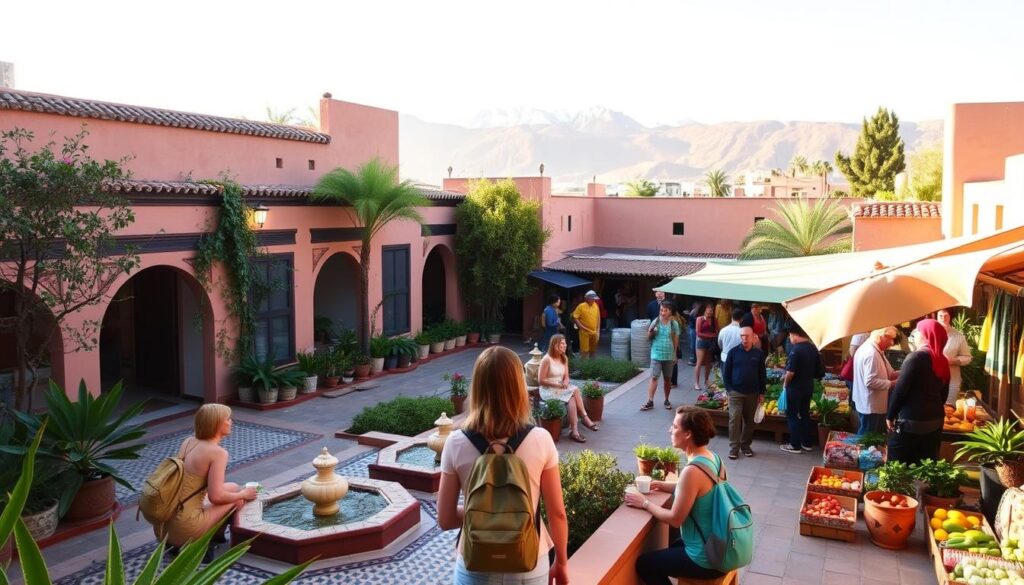
Helping local communities is easy. Stay in places owned by locals, eat at family-run spots, and shop at markets. This helps the local economy and gives you a real taste of Morocco.
- Opt for riads or guesthouses run by local families.
- Dine at eateries that serve traditional Moroccan cuisine prepared by locals.
- Purchase handicrafts directly from artisans.
Eco-Friendly Travel Tips
Morocco’s landscapes, from the Sahara to the Atlas Mountains, are delicate. Travelers need to be careful. Here are some tips to travel green:
- Reduce Plastic Use: Carry a reusable water bottle and say no to single-use plastics.
- Conserve Water: Use water wisely, as it’s scarce in some areas.
- Respect Wildlife: Don’t participate in activities that harm animals, like camel rides for fun.
Responsible Wildlife Tourism
Morocco has many animals, including endangered ones. When seeing wildlife, pick tours that are kind to animals and the environment.
Choose tour operators that are certified and care about nature and animals.
By thinking about our actions, we can enjoy Morocco’s beauty. We also help keep it beautiful for others in the future.
Post-Trip Reflections: What We Learned
Our trip to Morocco was a journey of discovery. We learned about the country’s rich history and culture. But we also learned about ourselves.
Morocco taught us about resilience, hospitality, and the value of local traditions. These lessons were invaluable.
Key Takeaways
We found out that a good travel plan is key. With a well-planned itinerary, exploring Morocco’s diverse landscapes and cultures is easy. Our trip planner helped us make the most of our time.
We enjoyed Marrakech’s vibrant medina and relaxed in the serene Sahara Desert. It was an unforgettable experience.
A New Perspective
Morocco broadened our view of the world. We gained a deeper understanding of different cultures and ways of life. The Moroccan people’s warmth and generosity amazed us.
They welcomed us into their homes and shared their traditions. It was a truly enriching experience.
Advice for Future Travelers
If you’re planning a trip to Morocco, be open-minded and flexible. Respect local customs. With some planning and preparation, you’ll have a safe and enjoyable trip.